Zero-Odor Poultry Manure Composting Machine: Sealed Aerobic Fermentation Tank
News 10 10 月, 2026
For modern industrial poultry farms, managing daily chicken droppings without breaking environmental laws or upsetting local communities with odor is a constant challenge. Traditional open-air windrow composting requires vast land areas, long processing times (up to 30 days), and produces excessive ammonia smells and leachate run-off.
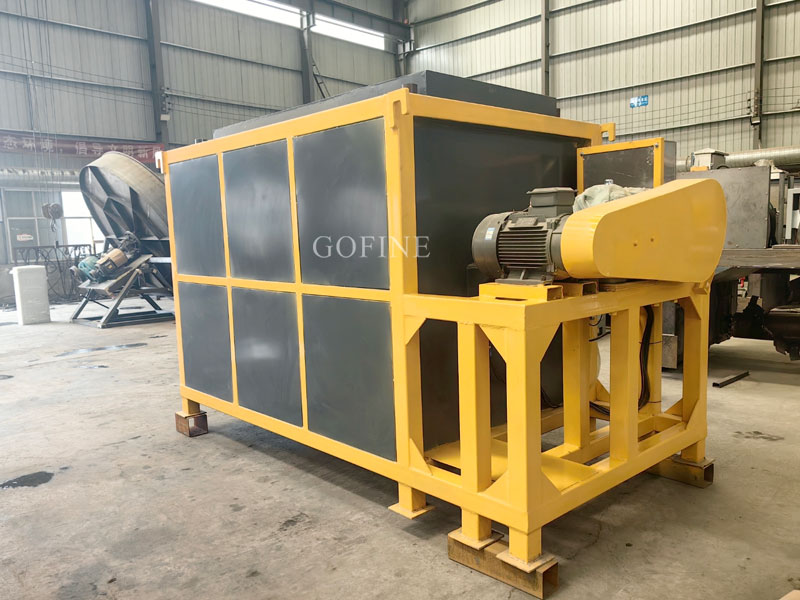
Our sealed vertical poultry manure composting machine provides a revolutionary, zero-odor aerobic fermentation solution that converts raw manure into premium organic fertilizer in just 7 to 10 days.
How Sealed Vertical Aerobic Fermentation Works
Our vertical fermentation tank utilizes heat-retaining insulation combined with forced aerobic aeration to accelerate natural microbial decomposition:
1. Rapid Thermophilic Bio-Decomposition ($60^\circ\text{C}+$)
Raw poultry manure mixed with a small ratio of carbon sources (such as sawdust or rice husk) is fed into the top of the vessel. High-efficiency aerobic bacteria quickly raise internal temperatures to $60^\circ\text{C}–70^\circ\text{C}$. This sustained heat completely destroys weed seeds, harmful bacteria (such as E. coli and Salmonella), and parasitic eggs within 24 hours.
2. Fully Enclosed Design & Advanced Deodorization
The entire composting process takes place inside a sealed, double-layer polyurethane insulated tower. Exhaust gases pass through a biological deodorization tower or UV-plasma spray scrubber, removing $99\%$ of ammonia and hydrogen sulfide odors before atmospheric discharge.
3. Automated Oxygen & Temperature Control
Sensors inside the vessel continuously track temperature and oxygen levels. The automated hydraulic mixing blades and forced air blowers supply optimal oxygen levels, ensuring continuous, uniform aerobic digestion without cold spots.
Fermentation Tank Performance & Capacity Specifications
Our vertical composting tanks are available in various volumes to match farm bird counts:
| Model Volume (m3) | Daily Manure Input (m3) | Suitable Poultry Population | Heating Power (kW) | Footprint Required |
| $30\text{ m}^3$ Tank | $3.0 – 5.0\text{ m}^3 / \text{day}$ | ~30,000 – 50,000 birds | 15 kW | $15\text{m}^2$ |
| $80\text{ m}^3$ Tank | $8.0 – 12.0\text{ m}^3 / \text{day}$ | ~80,000 – 120,000 birds | 22 kW | $25\text{m}^2$ |
| $120\text{ m}^3$ Tank | $12.0 – 18.0\text{ m}^3 / \text{day}$ | ~150,000 – 200,000 birds | 30 kW | $35\text{m}^2$ |
| $150\text{ m}^3$ Tank | $18.0 – 25.0\text{ m}^3 / \text{day}$ | ~200,000+ birds | 37 kW | $45\text{m}^2$ |
Environmental & Economic Benefits
-
Minimal Land Footprint: Vertical tower design consumes only $10\%$ of the land area required by open windrow composting.
-
All-Weather Year-Round Operation: Polyurethane insulation ensures smooth fermentation even in freezing sub-zero winter climates.
-
Turn Waste into Organic Gold: Output compost is rich in humic acid and stable organic matter, ready for direct soil application or downstream granulation.
Frequently Asked Questions (FAQ)
Q: How does a vertical fermentation tank handle high-moisture chicken manure?
A: Raw manure should ideally have a moisture level below $65\%$. If raw manure is too wet ($>70\%$), we recommend mixing in dry organic bulking agents (like sawdust, straw powder, or recycled dry compost) to achieve optimal airflow.
Q: What is the power consumption of a $100\text{m}^3$ fermentation tank?
A: Because the thermophilic fermentation process generates its own biological heat, electrical heating elements operate only during initial startup. Daily electricity usage for aeration blowers and intermittent hydraulic mixing is extremely low.
Solve Your Farm Waste Issues Today!
Ready to modernize your farm’s waste management and eliminate odor compliance issues? Contact our engineering specialists today to receive a personalized proposal and layout design!
Prev:NULL Next: Pig Manure Compost Turner: Swine Manure Fermentation System